
Loading...
Serving Coachella, CA and surrounding areas. (442) 285-0532
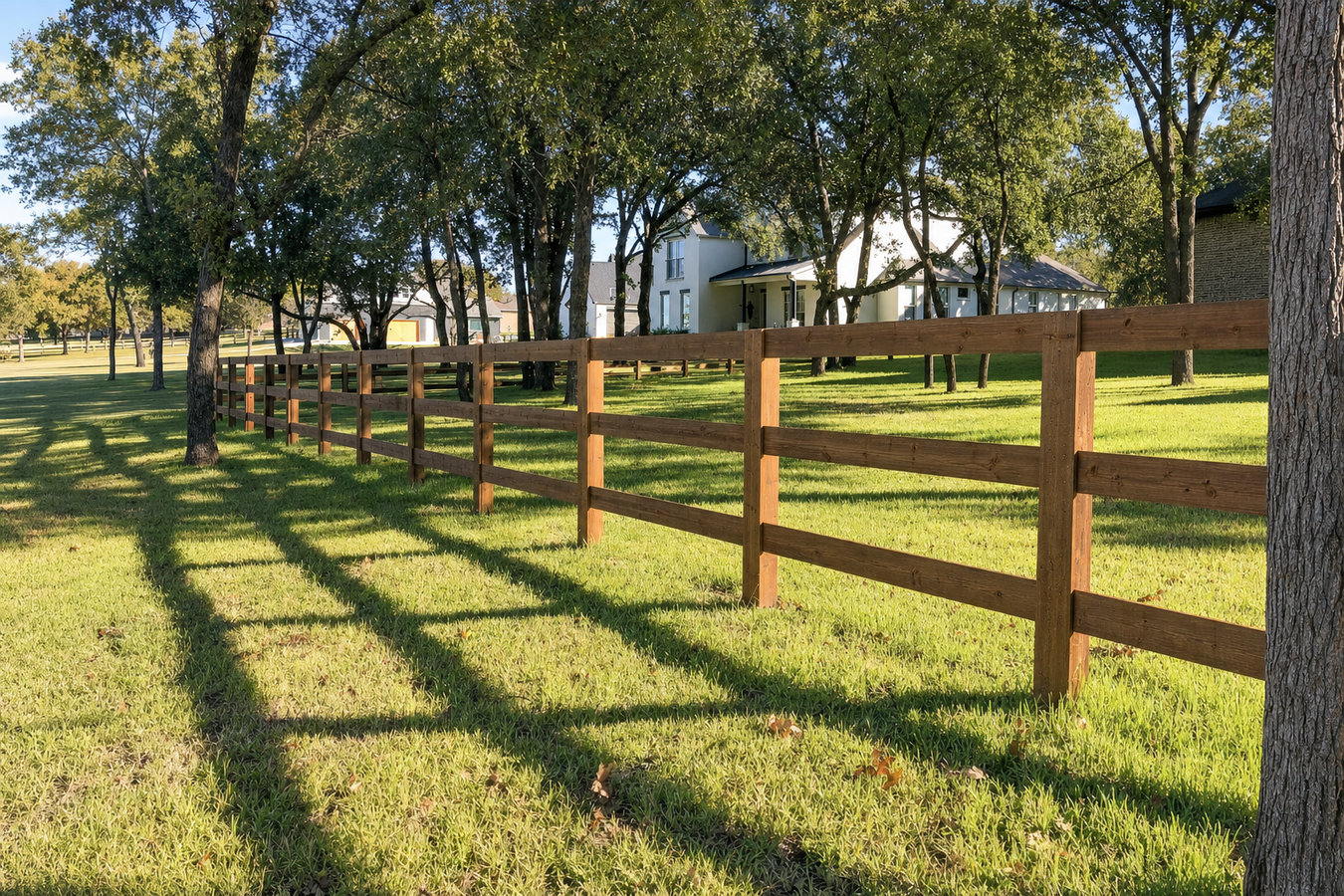
Sandy soil, 110-degree heat, and 50-mph wind gusts demand fencing built differently. We install farm fencing that stays put through desert conditions.
Farm and ranch fencing in Coachella covers perimeter fencing to keep livestock in, cross-fencing to divide pastures, and boundary fencing along roads or property lines - and a straightforward 5-to-10-acre perimeter typically takes a professional crew two to five days to complete.
Agricultural property owners in Coachella deal with conditions that most fencing guides do not account for: sandy soil that does not grip posts, summer heat that degrades vinyl and dries out wood quickly, and wind events that can rack a fence overnight if corners are not built correctly. Getting farm fencing right here means choosing the right materials and setting posts the way the soil requires - not just following a standard installation guide. If you also need smaller-scale pet or animal containment on your property, our pet and dog fencing service handles that as a separate, more tailored option. For livestock operations weighing electrified wire, Bristol Fence Contractor has a useful breakdown of electric fence installation as an alternative approach.
We walk every property before quoting anything. The terrain, your irrigation lines, the wind exposure, and what animals you are keeping all shape the right answer. We give you a written estimate that breaks out materials and labor - not just a single number.
If you can push on a post and feel it move, or if posts are visibly tilting away from vertical, the fence is losing its structural integrity. In Coachella's sandy soil, this happens faster than in areas with denser ground - posts set without concrete footings are especially prone to this. A leaning fence will not contain animals reliably and will get worse on its own.
Walk your fence line and look for sections where wire hangs loose between posts, or where the bottom wire has lifted off the ground. Sagging wire means tension has been lost - either because posts have shifted or the wire has stretched or corroded. In the desert heat, wire expands and contracts with temperature swings, which accelerates this process.
A gate that used to work fine but now drags or will not close properly is telling you the gate post has moved or the hinge hardware has failed. This is one of the most common problems on working farm fences and one of the most important to fix quickly - a gate that will not close is an escape route for livestock.
After a major windstorm - which Coachella Valley property owners know well - walk your entire fence line even if nothing looks obviously wrong from a distance. Wind can rack a fence section without knocking it flat, leaving it weakened and out of alignment. A fence that survived one big wind event in poor shape may not survive the next.
We handle perimeter fencing, cross-fencing, corral construction, and gate installation on agricultural properties throughout the Coachella Valley. Galvanized steel pipe and high-tensile wire are the materials we reach for most often in this climate - both handle the heat, resist UV degradation, and outlast vinyl or untreated wood by decades. For properties with lighter animal loads or those needing lower-cost coverage across large acreage, woven wire and barbed wire are also options we work with regularly. Every fence we build starts with calling California 811 to mark public utility lines - standard practice before any post is driven on your property. For properties with private irrigation lines, we walk the land with you to map out where to be careful.
When a property needs more than wire fencing - such as a secure corral, a heavy-duty panel system, or fencing that doubles as a visual boundary - our chain link fence installation service is a practical option for high-traffic areas where durability and visibility both matter. For properties that use electrified wire to manage livestock movement, Pacifica Fencing covers electric fence installation as a reference point for that approach. We will walk you through what makes sense for your specific use case.
Best for property owners who need to establish a clear outer boundary, keep livestock from wandering, or mark property lines before other work begins.
Best for operations that rotate livestock between pasture sections or need to separate animals by type, size, or feeding schedule.
Best for handling and sorting livestock - built heavier and with gate configurations designed for working animals, not just containment.
Best for properties where existing fencing is sound but gates sag, drag, or fail to latch - the most-stressed part of any farm fence.
The Coachella Valley has some of the most demanding conditions in California for agricultural fencing. Summer temperatures regularly exceed 110 degrees, UV exposure is extreme, and the sandy soil common throughout the valley does not grip fence posts the way clay or loam does. Posts set without adequate depth and concrete footings will lean or pull out - especially near gates where animals push and rub. Wind events in the valley can bring gusts of 50 mph or more, particularly during spring. A fence that is not braced at corners and end posts will rack and fail. Solid panel systems are especially vulnerable because they act like sails in a windstorm - open-wire designs are the better choice in exposed locations. For guidance on best practices in this climate, the UC Cooperative Extension publishes livestock fencing resources specifically for California conditions.
Agricultural properties in the Coachella Valley also have extensive underground irrigation infrastructure - drip lines, mainlines, and laterals that may not be fully mapped. Driving posts without knowing where those lines run can rupture irrigation systems that are expensive to repair. We call 811 and walk the property with you before any digging starts. Property owners in Thermal and Mecca - where agricultural land is most concentrated in the eastern valley - know these challenges well, and we serve both communities regularly.
We will ask about your acreage, what animals you are keeping, and roughly what you are trying to accomplish. You do not need exact measurements - that comes at the on-site visit. We reply within one business day to schedule a time.
We walk your property with you to assess terrain, soil, existing fencing, and gate locations. We note sun exposure, wind patterns, and any irrigation infrastructure. You get a written estimate breaking out materials and labor separately - not just a single number.
If your project requires a Riverside County permit, we handle the application. We also call 811 before any digging and ask you to show us where private irrigation lines run - this step protects your property and the crew.
The crew sets posts first, working from corners and ends inward. Wire is stretched after posts are set. Most residential farm fencing projects in this area wrap up in two to five days. Before we leave, you walk the fence line with us and test every gate.
No pressure and no obligation - just a free on-site visit, a walkthrough of your property, and a written estimate that breaks down exactly what the job will cost.
(442) 285-0532We set posts at the depth and with the concrete volume required for Coachella's sandy, gravelly ground. Posts that are set correctly here do not lean or pull out after a season of animals pushing against them - the extra work upfront is what makes the fence last.
Every corner post and end post on our farm fence jobs gets diagonal bracing sized for the wind loads this valley produces. We have seen what a spring windstorm does to fences that were not built to handle it, and we build accordingly from day one.
We call California 811 before any post is driven - no exceptions. On agricultural properties with private irrigation lines, we walk the land with you first. Rupturing irrigation infrastructure is expensive and avoidable, and we take the extra time to make sure it does not happen on your property. Verify the 811 requirement at california811.org.
Any contractor doing fencing work in California must hold a valid license from the California Contractors State License Board. You can look up any license number on the CSLB website in about two minutes - it is free and shows whether the license is active. We hold a valid California contractor's license and welcome you to verify it.
Farm fencing in the Coachella Valley is not complicated when you work with someone who knows the soil, the wind, and the permit process. We bring that local knowledge to every job, from a single gate replacement to a full perimeter installation.
Smaller-scale containment fencing for domestic animals - a more tailored option when livestock-grade perimeter fencing is more than your situation requires.
Learn MoreHeavy-duty chain link for high-traffic farm areas, corrals, and equipment storage where visibility and durability both matter.
Learn MoreThe best installation windows in Coachella fill before the heat arrives and before wind season. Call now for a free on-site estimate and a realistic timeline.